
Service
Amazon FBA management
Restock planning, shipment execution, stock cover modelling and storage fee control, with bids scaled to the cover each ASIN actually has.
Scope
- Restock & replenishment planning
- FBA shipment creation & tracking
- Stock cover & runway modelling
- Storage fee & aged inventory control
- Removals & disposal decisions
- Inventory Performance Index management
What this is meant to produce.
- Rank you can hold
- Stockouts cost more than the lost sales. They cost the rank position that took months of advertising to buy. Planning is built around protecting that position.
- Storage that does not eat margin
- Aged inventory surcharges and long-term storage fees tracked before the quarterly charge lands, with removal or liquidation decided while it is still a choice.
- Advertising aligned to supply
- Bids scale with cover and protect when cover is thin, because the person running the ads is the person watching the stock.
In practice
FBA inventory looks like a logistics function and behaves like a marketing constraint. Everything advertising is permitted to attempt is set by how many units are in the network and how long they will last.
Stock cover decides bid strategy
There is no single correct bid for a product. There is a correct bid for a product with four months of cover and a different correct bid for the same product with three weeks of cover.
Deep cover means scaling: push for placement, buy rank, accept a higher ACOS while acquiring position. Thin cover means protecting: defend existing rank, hold branded terms, stop paying to acquire customers you cannot serve. Getting this backwards is one of the most expensive errors in the channel, and it happens constantly when ads and inventory are managed by different people looking at different screens.
The cost of running out
A stockout is not a pause. Organic rank decays while you are unavailable, competitors absorb the placement and the reviews that go with it, and the position you rebuild afterward is bought at full price with advertising spend. The unit margin you missed is usually the smallest part of the loss.
The cost of overbuying
The opposite failure is quieter and just as expensive. Aged inventory surcharges escalate by age band, long-term storage fees land quarterly, and capital sits in a warehouse instead of in the next production run. Inventory age is tracked continuously so that removal, liquidation or a promotional push is a decision made in advance rather than a reaction to a fee that already posted.
What is managed
Restock planning against sales velocity, seasonality and lead time. Shipment plan creation, tracking and receipt reconciliation, including the discrepancies that require a case to recover. Restock limits and Inventory Performance Index. Removal and disposal orders where carrying cost has passed recoverable margin. Multi-marketplace stock allocation where a catalog serves several regions from shared supply.
Coordination, not replacement
Your freight forwarder, 3PL and manufacturer keep doing their jobs. My role is the Amazon-facing half: what to send, when, in what quantity, and what to do about it when a shipment arrives short.
Common questions
Questions I get asked first.
- Why does inventory management sit with the person running ads?
- Because they are the same decision. Scaling spend into a product with three weeks of cover buys a stockout. Cutting spend on a product with six months of cover pays storage fees for the privilege. When advertising and inventory sit with different people, this coordination failure happens monthly.
- What actually happens during a stockout?
- You lose the sales, the organic rank position decays, and competitors take the placement. When you come back in stock you are paying to rebuild a position you already owned. That rebuild cost usually exceeds the margin on the units you failed to have.
- Do you handle the physical logistics?
- I handle the Amazon side: shipment plans, restock limits, tracking, receipt discrepancies, reconciliation and removal orders. Freight, 3PL and customs sit with your logistics provider, and I coordinate with them rather than replacing them.
- How do you decide when to remove aged inventory?
- By comparing the aged inventory surcharge and long-term storage fee against realistic sell-through at a discounted price. If the carrying cost over the next two quarters exceeds the recoverable margin, removal or liquidation is the cheaper outcome, but that decision is yours, made with the numbers in front of you.
Where this work shows up.
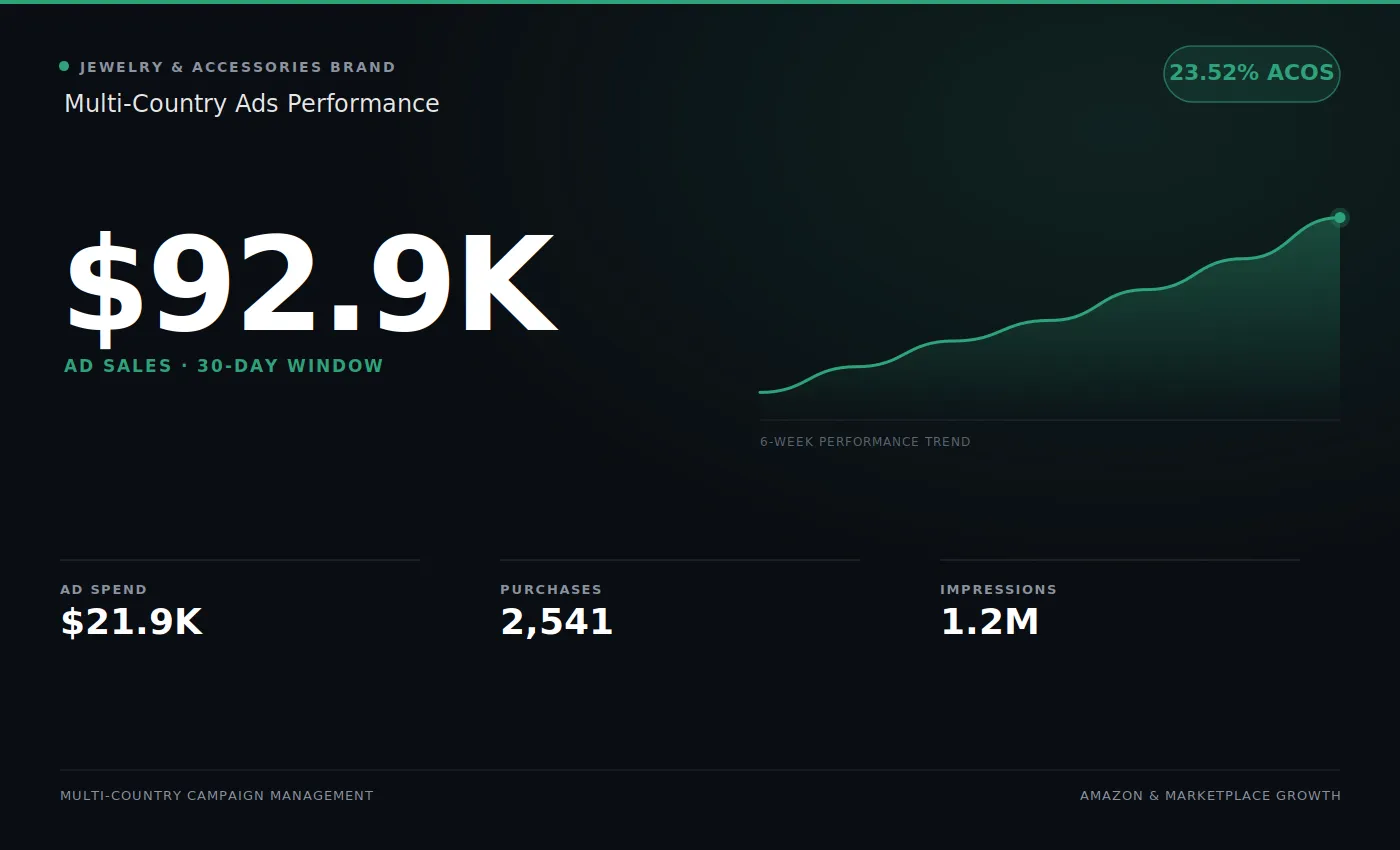
Sponsored AdsSponsored Ads · Jewelry
Jewelry & Accessories brand
- Ad sales
- $92,915.03
- ACOS
- 23.52%
- Impressions
- 1,236,219
Taking on new accounts
Start with an account audit.
Send the marketplace, the category and what is currently going wrong. You get a written read on advertising structure, catalog health and the first three things worth changing, before any engagement is discussed.
- Reply
- One working day
- First read
- Free, in writing