Service
Amazon PPC management
Campaign structure, search-term governance and bid discipline, with the ACOS target derived from your break-even after fees, returns and COGS.
Scope
- Campaign architecture rebuild
- Search-term harvesting & negation
- Placement & bid governance
- Budget pacing by margin
- Weekly performance reporting
- Competitor & defensive targeting
What this is meant to produce.
- ACOS you can defend
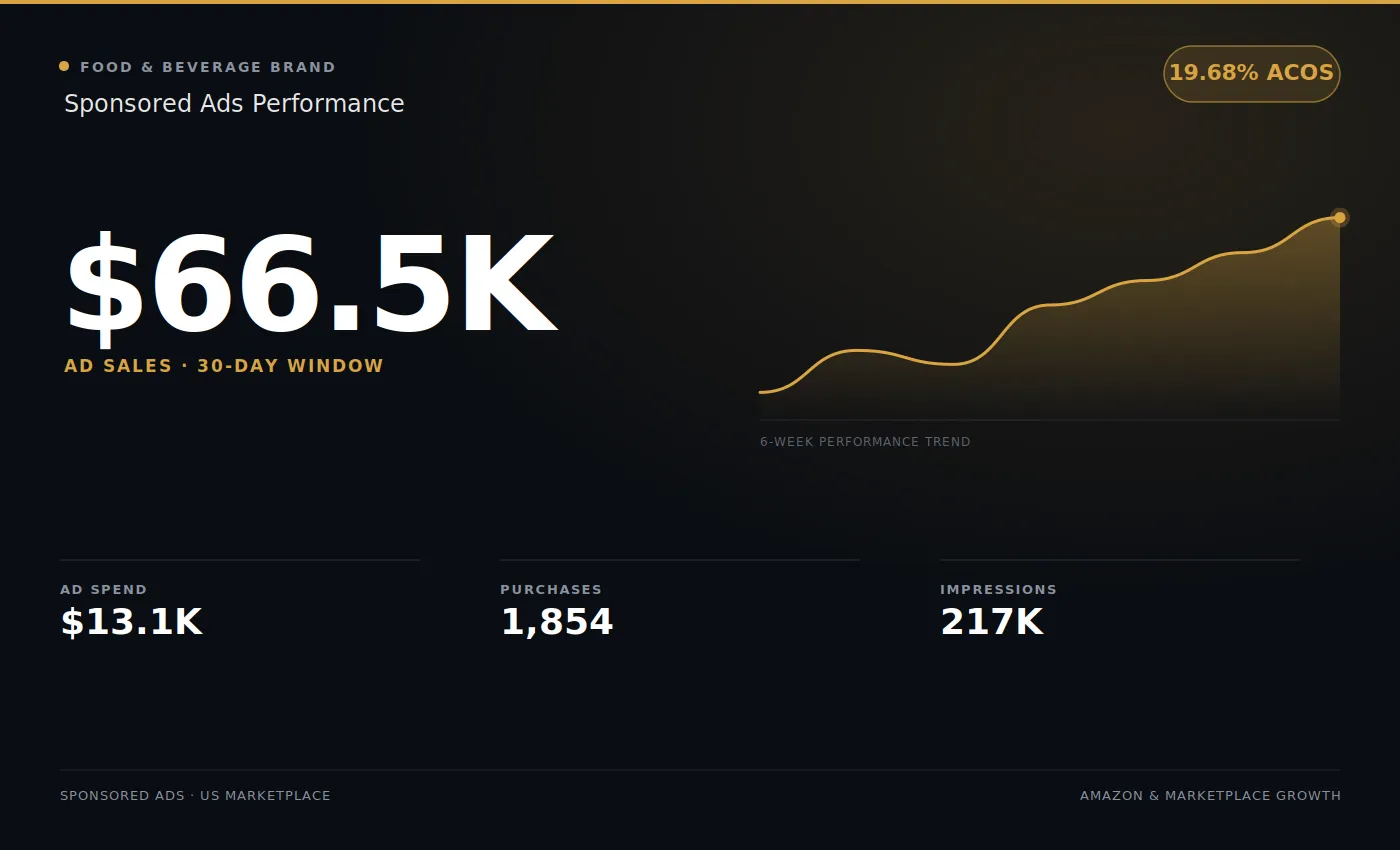
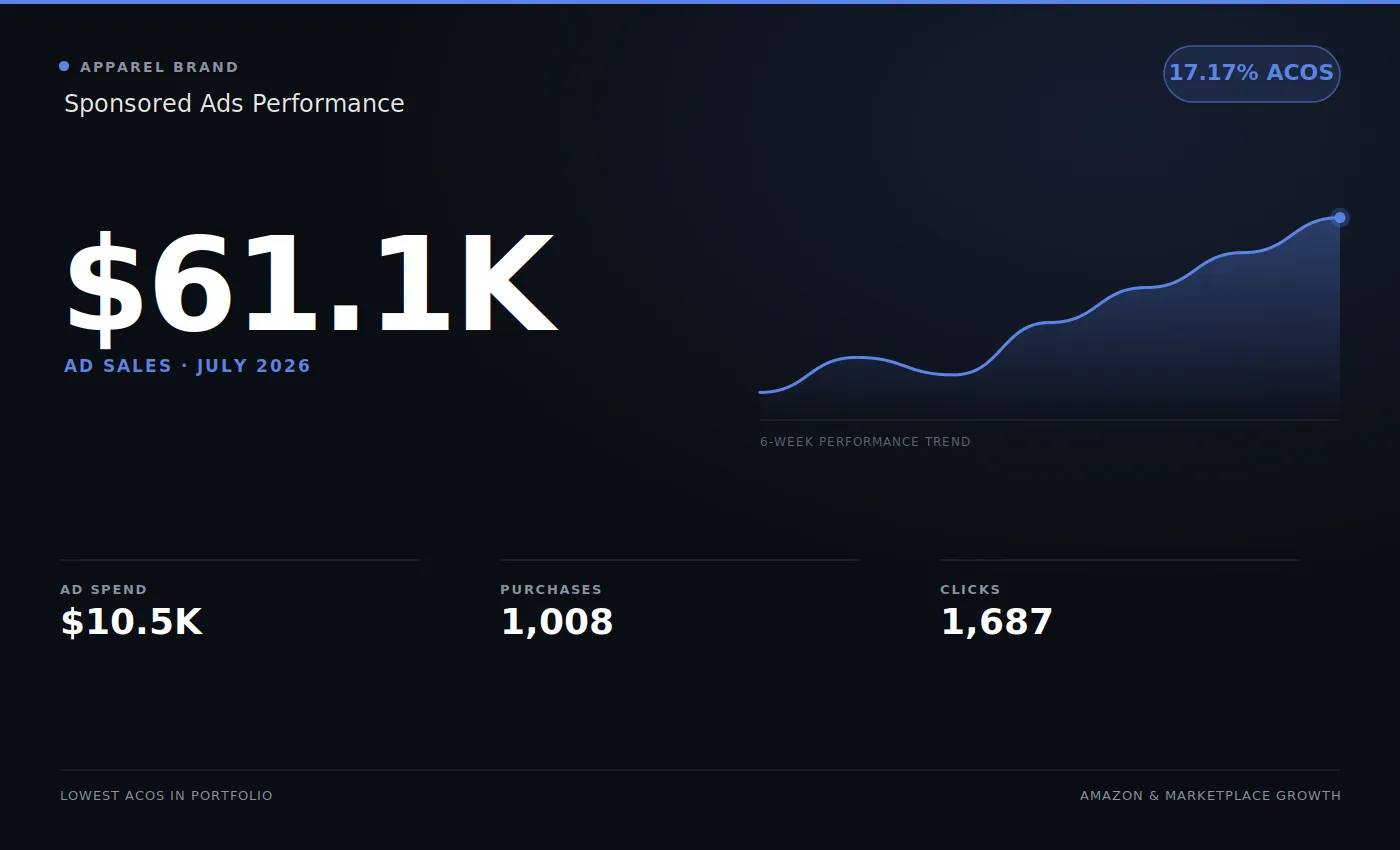
- A target set against real contribution margin after fees, returns and storage, not a number inherited from a previous agency. Published accounts run between 17% and 24% ACOS.
- Structure that survives scale
- Campaigns segmented by intent and match type so that a single bad search term cannot quietly drain a budget across an entire catalog.
- No wasted impressions
- Continuous negation and placement control, so spend concentrates where conversion actually happens instead of spreading thin across broad discovery.
In practice
Most Amazon advertising accounts are not underperforming because of bad bids. They are underperforming because the structure underneath the bids makes good decisions impossible.
When branded and non-branded terms share a campaign, the branded conversions subsidise the wasteful ones and the reported ACOS looks fine. When one budget covers thirty keywords, the two that convert get starved by the twenty-eight that do not. No amount of bid tuning fixes either problem. The account needs to be able to tell you where the money is going before it can tell you where it should go.
How I run advertising
Break-even before target
The first number I calculate is not ACOS. It is contribution margin per unit after referral fees, FBA fees, returns, storage and COGS. That gives a break-even ACOS. Everything above it is a deliberate decision to buy share; everything below it is profit extraction. Without that number, an ACOS target is guesswork with a decimal point.
Segmentation by intent
Campaigns are split so that each one answers a single question. Exact-match harvest campaigns hold proven converters with bids that can be pushed. Phrase and broad campaigns exist to discover, with tight budgets and aggressive negation. Auto campaigns are research instruments, not revenue channels. Branded defence is separated entirely so it never flatters the numbers of everything else.
Search terms, weekly
Search-term reports get worked every week, not every quarter. Converting terms graduate into exact match. Terms with clicks and no conversions get negated at the right level, campaign or ad group, depending on whether the term is bad everywhere or just bad in that context. This is unglamorous and it is where most of the recoverable waste lives.
Placement and dayparting
Top-of-search converts differently from rest-of-search and product pages, and the same keyword deserves different bids in each. Placement multipliers get set from the account’s own data. Where volume justifies it, dayparting shifts budget toward the hours that actually convert instead of spending the day’s budget by 11am.
What you receive
Weekly reporting that answers three questions: what changed, why it changed, and what is being done about it. Not a screenshot of a dashboard you already have access to.
What this is not
I do not run advertising in isolation from the listing. A campaign pushing traffic to a detail page with a weak main image, missing backend keywords or a broken variation family is buying clicks that were never going to convert. If the listing is the constraint, I will tell you that before I take budget for ads.
Common questions
Questions I get asked first.
- What ACOS should my brand be targeting?
- It depends entirely on your contribution margin after Amazon fees, returns, storage and COGS. A 30% ACOS is excellent for a high-margin supplement and disastrous for a low-margin commodity. The first thing I do is calculate your break-even ACOS, then set a target relative to whether the goal is profit extraction or share growth.
- Do you rebuild existing campaigns or optimise what is already running?
- Both, in that order of assessment. If the existing structure separates intent cleanly and has usable historical data, I optimise inside it, history is valuable and rebuilding resets it. If keywords are mixed across match types and campaigns share budgets they should not, a rebuild costs less than fighting the structure for a year.
- How quickly does PPC work show results?
- Wasted spend can usually be cut within the first two weeks through negation and bid correction. Structural gains (better placement share, improved organic rank pulled up by advertising velocity) take a full sales cycle to read honestly, typically 60 to 90 days.
- Which advertising types do you run?
- Sponsored Products, Sponsored Brands, Sponsored Brands Video and Sponsored Display, including defensive targeting on your own detail pages and competitor conquesting where the margin supports it.
Where this work shows up.
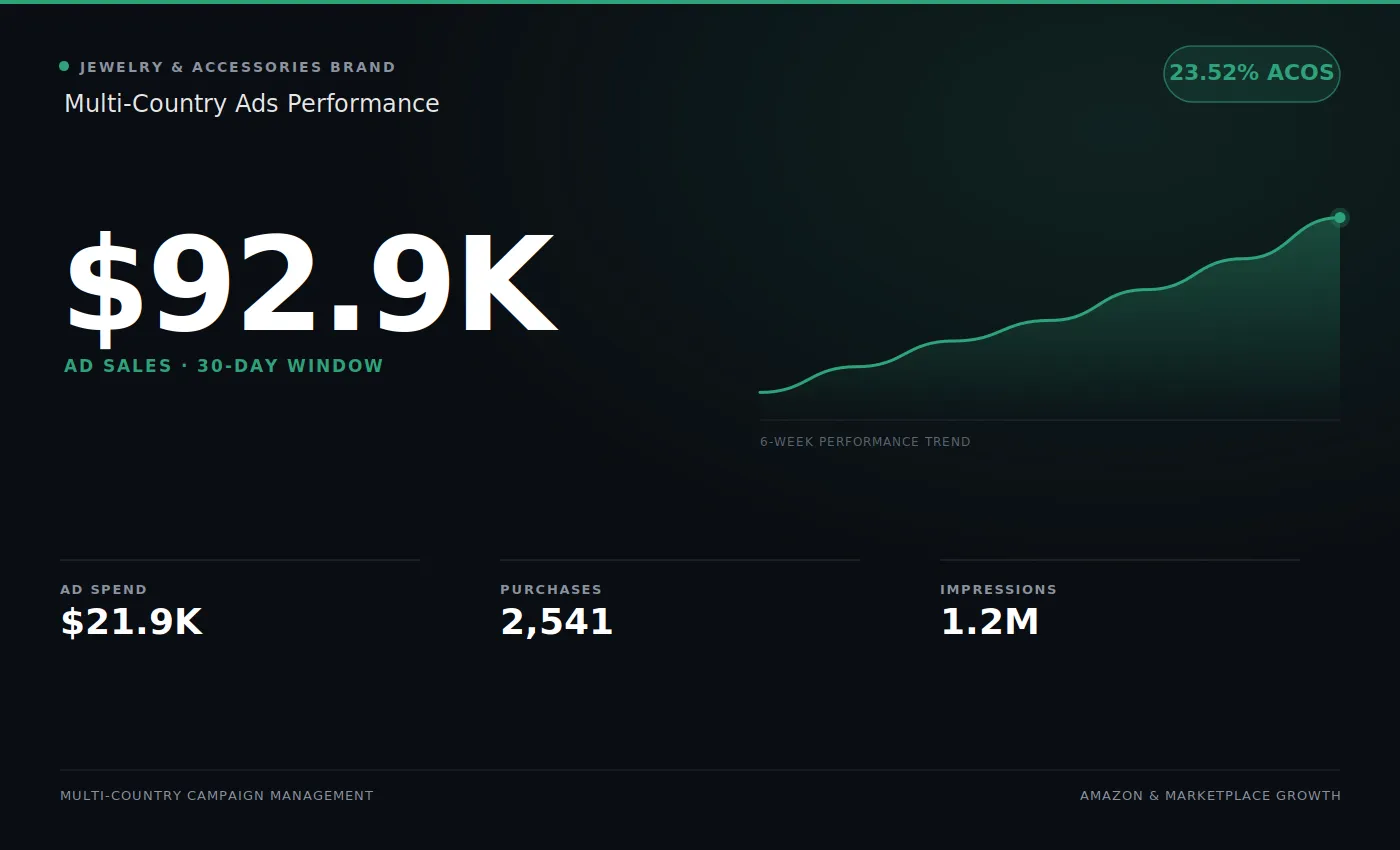
Sponsored AdsSponsored Ads · Jewelry
Jewelry & Accessories brand
- Ad sales
- $92,915.03
- ACOS
- 23.52%
- Impressions
- 1,236,219
Taking on new accounts
Start with an account audit.
Send the marketplace, the category and what is currently going wrong. You get a written read on advertising structure, catalog health and the first three things worth changing, before any engagement is discussed.
- Reply
- One working day
- First read
- Free, in writing